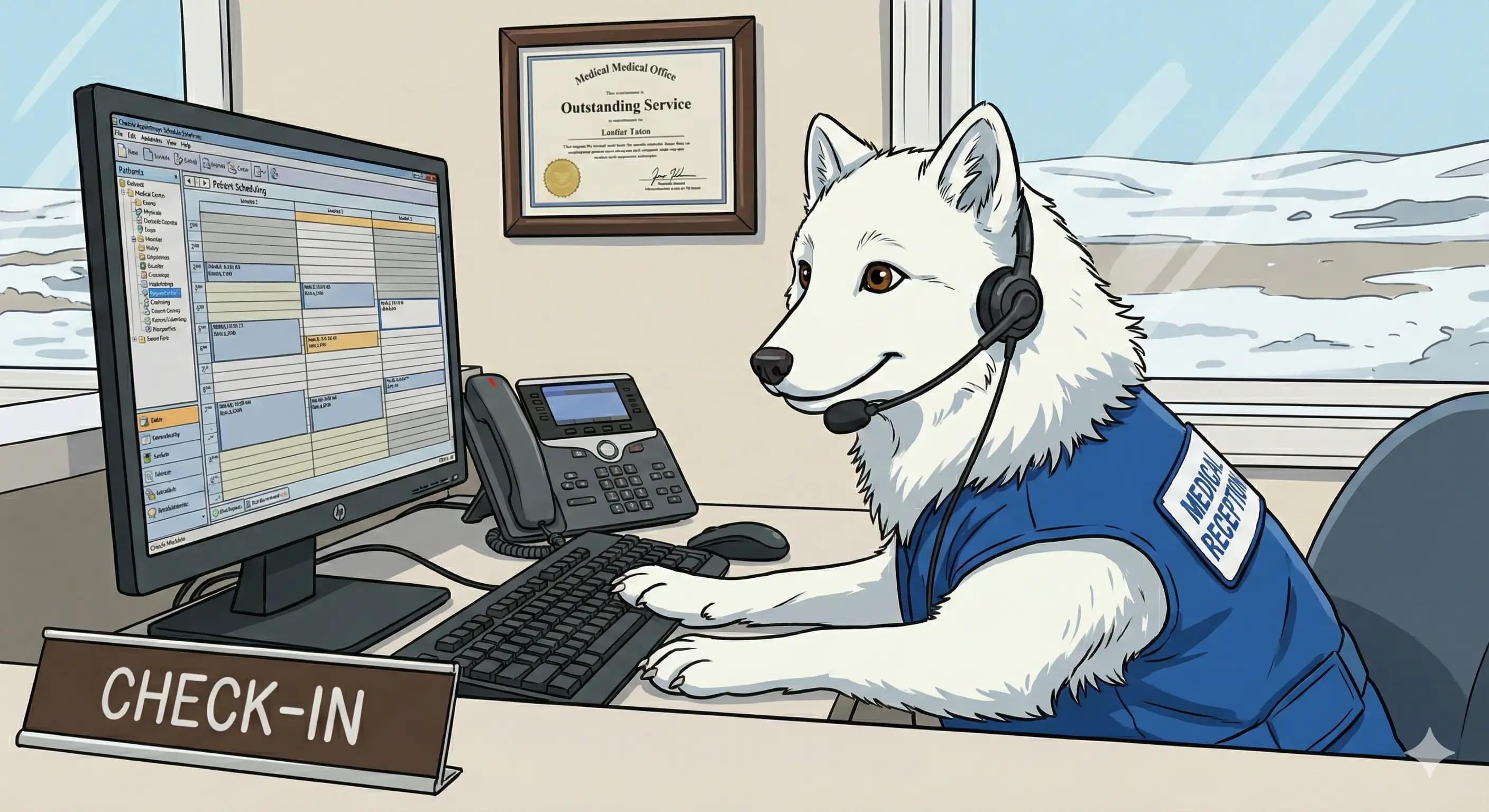
How Aussie Medical Clinics Use Virtual Receptionists
How Aussie Medical Clinics Use Virtual Receptionists
Kaia TyrellCustomer Success Manager
·
Top Australian medical practices are using AI-powered medical virtual receptionists to automate appointment booking, reminders, after-hours triage, and prescription requests. Reducing reception workload by 60-70% while improving patient access and cutting no-show rates in half.
Australian healthcare is under pressure. GP shortages, rising patient expectations, and administrative burden are stretching practices thin.
Yet some practices are seeing more patients than ever, reducing wait times, and improving satisfaction while their competitors struggle.
Their secret sauce? Strategic use of a medical virtual receptionist to handle the communication tasks that consume staff time without requiring clinical judgment.
The Healthcare Communication Challenge
The Phone Problem
The average Australian GP practice receives 150-300 calls per day. These calls include:
Appointment bookings and changes
Prescription refill requests
Test result enquiries
General practice questions
New patient registrations
Referral follow-ups
The reality:
Receptionists are constantly on phones
Patients experience long hold times
Calls go unanswered during busy periods
Staff are stressed and overworked
If this sounds familiar, a medical virtual receptionist could be a potential solution that can free up staff and automate certain low complexity requests and workflows.
The After-Hours Gap
Medical issues don't respect business hours. Patients worry at night and want advice. Symptoms develop on weekends. Prescriptions run out unexpectedly. Test result anxiety doesn't wait.
Current solutions fall short:
After-hours locum services (expensive, impersonal)
Nurse triage lines (limited capacity)
"Call back during business hours" messages (poor experience)
The Administrative Burden
For every patient interaction, there's admin:
Appointment reminders
No-show follow-ups
Health assessment calls
Recall management
Satisfaction surveys
Clinically important but time-consuming for staff to execute manually.
How Leading Practices Are Using Medical Virtual Receptionists
Intelligent Appointment Management
AI handles:
Booking appointments (by type, doctor, time preference)
Rescheduling requests
Cancellation processing
Waitlist management
Sample interaction:
"I'd like to book an appointment with Dr. Chen."
"I can help with that. Are you looking for a general consultation, or is this for something specific like a health assessment or procedure?"
"Just a general appointment."
"Dr. Chen has availability tomorrow at 10:15am or Thursday at 2:30pm. Which works better for you?"
Results:
Reception time on booking reduced 70%
24/7 booking availability
Reduced phone wait times
Higher patient satisfaction
Your team no longer spends hours daily on routine booking calls. That's time they can spend on complex patient needs instead.
Automated Appointment Reminders
The DNA problem:
Australian practices see 5-15% no-show rates
Each missed appointment costs $150-300 in lost revenue
Downstream effects on patient health
AI reminder calls:
Call 48-72 hours before appointment
Confirm attendance
Offer rescheduling if they can't make it
Backfill cancelled slots from waitlist
Sample call:
"Hi Sarah, this is the AI assistant from Bayside Medical. I'm calling to confirm your appointment with Dr. Smith tomorrow at 3pm. Will you be able to make it?"
"Oh, I forgot about that. Actually, can I reschedule?"
"Of course. I have availability on Thursday at 9am or Friday at 2pm with Dr. Smith. Would either of those work?"
"Bayside Medical, this is the after-hours AI assistant. How can I help you tonight?"
"My daughter has had a fever since this afternoon and I'm worried."
"I understand that's concerning. Let me ask a few questions to help direct you appropriately. How old is your daughter, and what has her temperature been?"
"Hi John, this is the AI assistant from Bayside Medical calling on behalf of Dr. Chen. Our records show you're due for your annual diabetes review. Would you like to book an appointment?"
Challenge: Constant phone congestion, high staff turnover, patient complaints about wait times
Medical Virtual Receptionist Implementation:
Appointment booking AI
Reminder calls
After-hours FAQ
Results (6 months):
Phone wait time: 4 minutes → 2 seconds
DNA rate: 12% → 5%
Staff overtime: 15 hours/week → 2 hours/week
Patient satisfaction: +18 NPS points
Example Case Study 2: Regional Medical Centre
Profile: 3 GPs, 2 receptionists, rural location
Challenge: Staff can't cover phones and front desk simultaneously. After-hours coverage impossible locally.
Medical Virtual Receptionist Implementation:
After-hours AI answering
Appointment booking
Triage questionnaire
Results:
After-hours calls handled: 100+ monthly
Emergency escalations: Appropriate and timely
Reception freed for patient-facing tasks
Extended effective availability without added cost
Just as GP Shortages: AI Voice Medical Receptionists describes, rural and regional practices particularly benefit from AI support when recruiting additional staff isn't possible.
Example Case Study 3: Specialist Practice
Profile: Cardiology, high-acuity patient base
Challenge: Phone calls often urgent. Staff stressed. Patients anxious about test results.
Medical Virtual Receptionist Implementation:
Appointment management
Pre-procedure calls
Post-procedure check-ins
Test result notification scheduling
Results:
Patient anxiety reduced (regular contact)
Staff time on admin: -40%
No-show rate for procedures: -65%
Post-procedure complication detection improved
Implementation Considerations
Privacy and Compliance
Your medical virtual receptionist must address:
Health Privacy:
Patient consent for AI interaction
Data storage and access controls
Compliance with privacy principles
Health records integration security
Clinical Boundaries:
AI provides information, not diagnosis
Clear escalation to clinical staff
Documentation of AI interactions
Appropriate disclaimers
Voxworks approach:
Australian data hosting
Healthcare-specific compliance features
Configurable consent collection
Audit trails and documentation
Integration with Practice Software
Commonly used systems:
Best Practice
Medical Director
Genie Solutions
Pracsoft
MedTech
Integration options:
Direct API connections
Webhook-based triggers
Manual workflow with automation
Practice management system plugins
Staff Adoption
Change management matters.
Involve staff in planning. Address concerns about job security upfront. Make it clear: AI handles the mundane tasks so they can focus on patients who need their expertise and care.
Train your team on exception handling. Show them how to review AI interactions and step in when human judgment is needed.
Positioning: "AI handles the repetitive calls so you can focus on patients who need your expertise and care."
When your team sees the phone pressure ease and their work becoming more meaningful, adoption happens naturally.
Getting Started
Step 1: Identify Pain Points
Common starting points:
Phone wait times excessive
High no-show rates
After-hours coverage gaps
Recall compliance low
Staff overwhelmed with calls
Step 2: Start with One Use Case
Recommended first implementation: Appointment reminders
Why?
Clear ROI (reduced DNAs)
Low risk (simple workflow)
Quick results (see impact in weeks)
Staff-friendly (helps them)
Step 3: Configure and Test
Set up AI agent with practice details
Configure integration with booking system
Test with small appointment batch
Refine scripts based on results
Step 4: Expand
Once reminders are working:
Add appointment booking
Add after-hours handling
Add recall campaigns
Add other workflows
The ROI of a Medical Virtual Receptionist
Cost Savings
Reduced DNA revenue recovery:
100 appointments/week
10% DNA rate → 5% DNA rate
5 recovered appointments × $80 = $400/week
Annual value: $20,800
Staff time savings:
2 hours/day saved on calls
$30/hour cost
5 days × 52 weeks = $15,600/year
After-hours coverage:
Alternative: Locum service $500+/night
AI: ~$20/night equivalent
If covering weekends: $25,000+/year savings
Revenue Enhancement
More appointments booked (24/7 availability)
Better recall compliance (more preventive visits)
Reduced no-shows (slots filled)
Staff capacity for higher-value tasks
Total Value
Conservative estimate for average practice:
$20,000+ annual DNA reduction
$15,000+ staff efficiency
$10,000+ after-hours savings
$10,000+ revenue enhancement
Total: $55,000+ annual value vs. ~$6,000-12,000 AI cost
This gives you an idea of the sheer transformational ROI impact AI can have on your practice.
The Bottom Line
Australian medical practices face mounting pressure, but a medical virtual receptionist offers relief. By automating the communication tasks that consume staff time—appointment management, reminders, after-hours handling, recalls—practices can:
Reduce phone wait times dramatically
Cut no-show rates significantly
Extend availability without extending hours
Free staff for patient-facing work
Improve patient satisfaction and outcomes
The practices gaining an edge aren't working harder. They're deploying technology to handle volume while preserving the human touch where it matters most: in clinical care.
Your competitors are either implementing this now or they will be soon. The question is whether you'll be ahead of that curve or behind it.
Ready to transform your practice communications? Start your free trial at voxworks.ai.